
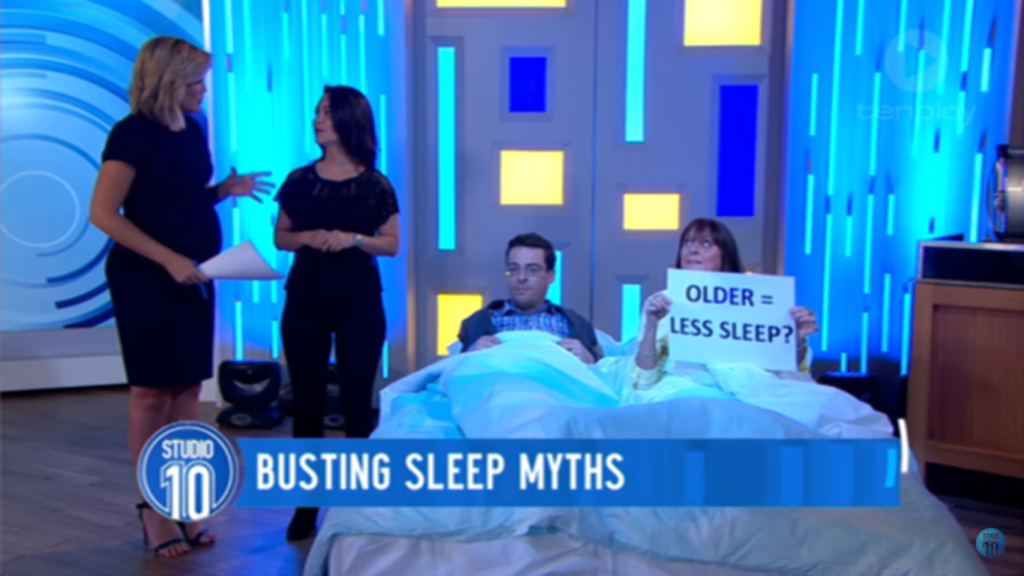
Busting Sleep Myths
Sleep Myths Busted: What You Need to Know
Transcript adapted into an SEO-optimized blog article by The Sleep Expert, Elina Winnel.
We all know sleep is important—but what if much of what you believe about it is wrong? In a humorous and insightful TV appearance, Elina Winnel, also known as The Sleep Expert, joins a lively segment to debunk some of the most common myths about sleep. Let’s dive into the facts, laugh at the fiction, and uncover why quality rest is so essential to your health and well-being.
Myth #1: Older People Need Less Sleep
FALSE. While older adults may get less sleep, that doesn’t mean they need less. According to Elina, from around the age of 20 onwards, our sleep requirements remain fairly consistent. Unfortunately, aging often comes with reduced sleep quality and quantity—but this contributes to aging itself.
“Less sleep means less human growth hormone, which accelerates the aging process.”
Myth #2: Lack of Sleep Doesn’t Kill
MISLEADING. While sleep deprivation alone may not be directly fatal, the consequences certainly can be. Poor sleep affects physical coordination, mental clarity, and emotional stability—making accidents far more likely.
“Driving while sleep-deprived can be as dangerous as driving over the legal alcohol limit.”
Myth #3: Morning People Are Just Born That Way
PARTLY TRUE. While natural chronotypes exist, they’re not fixed. Elina explains that night owls often crave stimulation and may be unknowingly addicted to adrenaline. By learning to deeply relax, you can shift your sleep timing and preferences.
“Deep relaxation releases bliss hormones—an excellent replacement for the adrenaline many night owls crave.”
Myth #4: Early Starts Are Always Better
NOT NECESSARILY. While syncing with natural daylight can be beneficial, the most important factor is getting quality, deep, and adequate sleep. For some people, that means sleeping in a little later.
“You’re part of a bigger ecosystem—but deep, restorative sleep matters more than waking up with the sun.”
Myth #5: Counting Sheep Helps You Sleep
INEFFECTIVE. While the idea is cute, most people find counting sheep too boring—and their mind wanders back to stressful thoughts. Better to use a relaxation technique that genuinely quiets the mind.
“Stressful thoughts trigger stress hormones. Calm the mind instead of counting sheep.”
Final Thoughts
With humor and clarity, Elina Winnel dismantles the myths many of us still believe about sleep. From age and adrenaline to accident risks and bedtime rituals, the truth is clear: good sleep is non-negotiable for a healthy life.
So, the next time someone tells you older people don’t need sleep—or that counting sheep will knock you out—send them this article (or just a sheep emoji).
Want to get to the root cause of your sleep issues?
Explore personalized sleep solutions and nervous system-based approaches; Click Here to Contact Us!